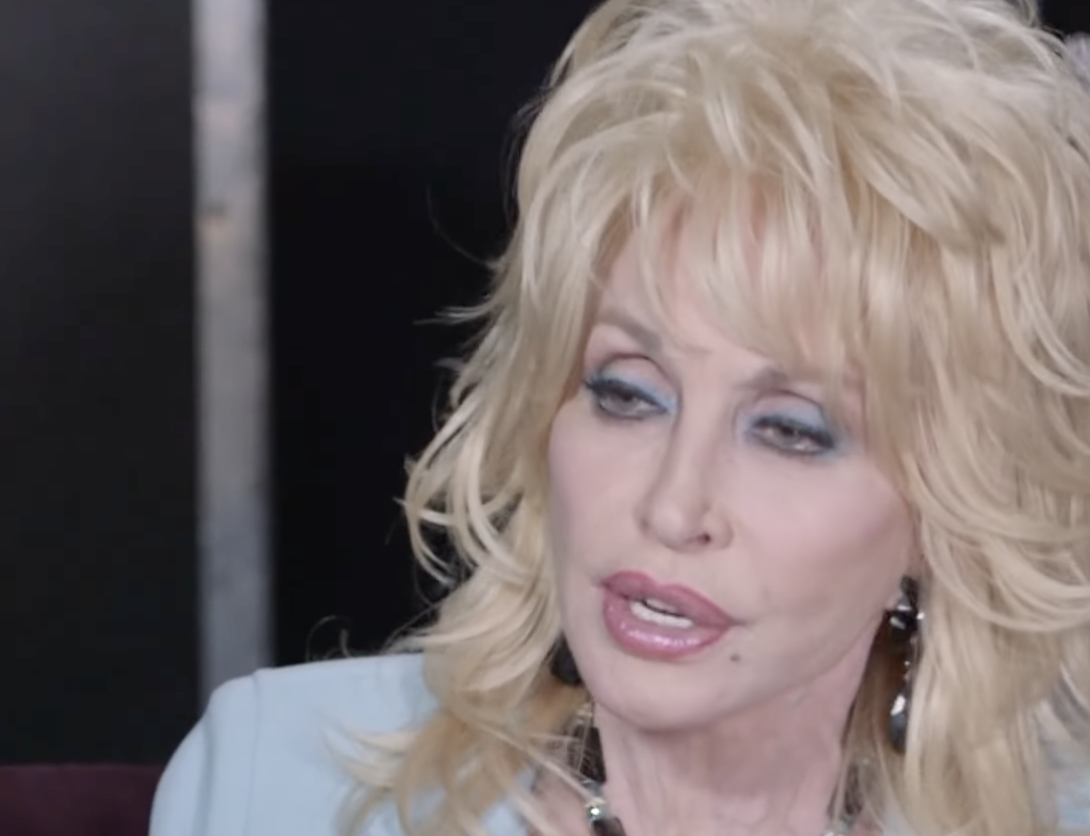
Dolly Parton, the country music legend whose songs, films, business ventures and philanthropy made her one of the most recognizable entertainers in American culture, died Tuesday in Nashville at age 80, leaving behind a legacy that extends well beyond her music and deep into the LGBTQ+ community she repeatedly embraced.
Parton died peacefully, according to her publicist. A cause of death was not disclosed. Her career stretched nearly six decades and included more than 100 million records sold, more than 3,000 songs written, and enduring hits stitched into the fabric of our lives that included “Jolene,” “Coat of Many Colors,” “9 to 5” and “I Will Always Love You.”
For LGBTQ+ fans, however, Parton represented something more personal. Her willingness to speak openly about acceptance, her rejection of religious condemnation of LGBTQ+ people, her support for marriage equality and her embrace of drag culture helped establish her as an unlikely but enduring LGBTQ+ icon.
Parton’s message was often rooted in her Christian faith rather than opposed to it.
“If people want to pass judgment, they’re already sinning,” Parton said in a 2014 interview with Billboard, adding, “I try to love everybody.”
Her support was not limited to words. When a lesbian visitor to Dollywood’s Splash Country said in 2011 that an employee had required her to turn a marriage equality shirt inside out, Parton publicly apologized and said she supported the gay and lesbian community. She also emphasized that Dollywood was intended to welcome all kinds of families.
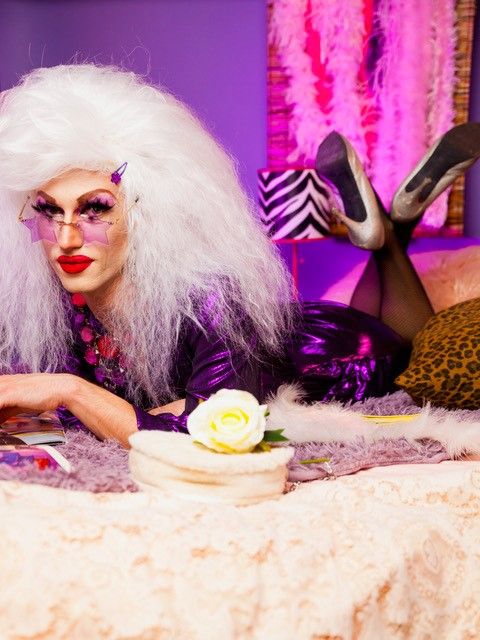
Parton also became part of LGBTQ+ pop culture through her willingness to embrace drag. She once entered a Dolly Parton look alike contest on Santa Monica Boulevard in West Hollywood without revealing her identity. Competing against drag performers dressed as her, Parton lost.
“I didn’t win,” she recalled during an interview with Good Morning America. “I didn’t even come in close, I don’t think.”
Her relationship with LGBTQ+ culture was also reflected in her music and screen work. Her 1991 album “Eagle When She Flies” included “Family,” a song that presented relatives as imperfect and different while maintaining that family should remain a place where people belong. Parton later wrote “Travelin’ Thru” for the 2005 film “Transamerica,” a movie centered on a transgender woman traveling across the country with a son she had only recently discovered.
Parton’s advocacy was especially notable because she came from a conservative religious background and built a career in country music, an industry that was not always welcoming to LGBTQ+ people.
Yet Parton consistently presented inclusion as an extension of her belief that people should be treated with compassion.
That approach continued into her philanthropic work. Parton supported efforts addressing HIV and AIDS and used the Dollywood Foundation to support charitable causes. California Gov. Gavin Newsom and First Partner Jennifer Siebel Newsom described her as a “proud and vocal ally to the LGBTQ community” in a statement following her death, noting her work fighting the spread of HIV and AIDS.
LGBTQ+ organizations also emphasized the significance of her support.
Human Rights Campaign President Kelley Robinson said Parton “showed the world what it looks like to lead with love” and stood with the LGBTQ+ community “long before others in entertainment.”
Lambda Legal CEO Kevin Jennings described Parton as an entertainment icon whose support for LGBTQ+ people and people living with HIV was unusually consistent.
“Long before it was easy or popular, Dolly Parton told our community that we belonged, and she meant it,” Jennings said.
SAG AFTRA also highlighted Parton’s relationship with LGBTQ+ audiences after her death. Duncan Crabtree Ireland, the union’s national executive director and chief negotiator, called her a “steady friend to the LGBTQ+ community well before that was easy to do.”
But Parton’s legacy cannot be separated from the extraordinary entertainment career that made her voice so influential in the first place.
Born into a large, poor family in East Tennessee, Parton began performing as a child and appeared at Nashville’s Grand Ole Opry at 13. She moved to Nashville after high school and eventually became one of the most successful songwriters and performers in country music.
Her career expanded far beyond country music. “Jolene” became one of her most recognizable compositions, while “I Will Always Love You” became an international phenomenon after Whitney Houston recorded it for the 1992 film “The Bodyguard.” Parton also became a major film star through movies including “9 to 5” and “Steel Magnolias.”
She built an entertainment empire around Dollywood, became a successful author and established Dolly Parton’s Imagination Library, which provides free books to children from birth through age 5 in participating communities.
Her ability to cross cultural and political boundaries was one of the defining characteristics of her public persona. Parton generally avoided partisan politics, telling the podcast “Dolly Parton’s America,” “I don’t do politics,” because she had fans on both sides of the political divide.
That distance from conventional political identity did not prevent her from speaking about acceptance.
Instead, Parton often framed her worldview around kindness, personal freedom and refusing to judge people for who they are.
For generations of LGBTQ+ fans, that combination became part of what made Dolly different. She did not simply perform songs that became part of queer culture. She repeatedly acknowledged the community that embraced her, welcomed LGBTQ+ fans into her entertainment spaces and used her enormous cultural influence to argue for acceptance.
Her death closes a remarkable chapter in American entertainment, but the audience she embraced is likely to keep her music and message alive.
One thing is certain: the LGBTQ community will “always love” and remember their friend, Dolly Parton.